Indianapolis Street Car Saturday – Illinois Street Lines

Today, I am starting a new Saturday series called “Indianapolis Street Car Saturday.” My plan is to cover the Indianapolis Street Railways, a line or two at a time, every Saturday until I run out of street car lines to cover.

There was a time, not really all that long ago, really, that the city of Indianapolis was served by a street railway system that covered quite a bit of the city. What most people think of is the electric trolley cars, and the wires hanging across the streets to supply their power. This wasn’t always the case. The street railways started being put into place in 1864. Electrification had full stride in the 1890s. Today, I want to cover four different street car lines that all started as part of the Illinois Street line, as well as the original Fairgrounds line, since it was the first built.

It should also be noted that when I describe the street car lines, I am using the ORIGINAL street names as they appeared at the time. The current street name will be contained in parentheses after the original street name. I wanted to say this because it gets a bit confusing, especially after the 1894 numbered street name changes.

The earliest city directory listing of street car lines appears in 1879. At that time, the Citizens’ Street Railway Company was the operator of the street car service. Their offices, and main barn, was at the northeast corner of Louisiana and Tennessee Streets (now Capitol Avenue). The first street car line built, called the Illinois-Fairgrounds line, ran east on Louisiana to Illinois, north to Washington Street, west to West Street, then north to Military Park, which at one time had been the Indiana State Fairgrounds. That line would not be listed in the City Directory of 1879…but the name would come back into use when the state fairgrounds moved to the Maple Road (38th Street) location. This line would also be called the Blake Line when it came back into being in 1882.

1879 City Directory listing for the route of
the Illinois Street Car line.

The first line mentioned in the city directory is the Illinois Street line. This line also was laid down in 1864, running from the Louisiana Street barn to North Street. Two years later, it was extended to Seventh Street (now 16th Street). By 1889, the Illinois line was extended to 26th (now 34th) Street, with a Crown Hill loop running from Illinois to Mississippi Street (Boulevard Place) north of 26th (34th) Street. It would be electrified in 1890.

A separate addition to the Illinois Street line occurred with electrification. To the Crown Hill loop was added the Fairview line, continuing up Mississippi Street to 30th (38th) Street/Maple Road, west along Maple Road to Rookwood Street, north to 34th (42nd) Street, west to Fairview (Haughey), then north to the Fairview Park loop. This line would serve the new campus of Butler University when it moved from Irvington in 1928. It began life as an electrified line.

In 1911, Fairview line was changed to continue straight up Senate Avenue (Boulevard Place) to 42nd Street. This was in conjunction with the creating of the 38th Street boulevard that exists today. The “Rookwood Avenue elbow,” taking the line along 38th Street between Senate and Rookwood Avenues, was removed the following year. (Indianapolis Star, 15 April 1934)

In 1892, another addition to the Illinois Street line was added. This time, the line left Illinois Street at 26th (34th), going east to Central Avenue, then northeast on Fairgrounds (Fairfield) Avenue. It was built as an electrified line.

The last line to be added to the Illinois Street line skeleton was built and electrified in 1904. It was called the Illinois-Mapleton. While the other lines branched at 34th Street, the Mapleton would continue north to 38th Street. In 1914, it was extended to 39th Street. The Illinois-Mapleton lasted until 22 May 1942, when it was abandoned by the Indianapolis Street Railway Company.

The Illinois-Fairview Street Car line was mentioned in advertisements for the Beverly Heights addition on Boulevard Place between 43rd and 44th Streets. It was listed as “The Fairview Illinois Street Car Line – the city’s best – parallels the whole addition just one block south.” (Indianapolis News, 27 September 1916)

The other two Illinois Street lines would last as trolley lines with rails until 12 October 1951. Feeder busses would be used along the two lines from 13 October 1951 to 30 December 1951, when the company would also use trackless trolleys. This arrangement didn’t last long, and the trackless trolleys were removed from service, as were the overhead power lines.

Taking Over The Pendleton Pike Inside Indianapolis

There was a time in Indiana when most major roads were not maintained by the local governments, but by turnpike, or toll road, companies. I have covered this several times over the past year. Towards the end of the 19th century, the state of Indiana had gone so far as to pass legislation allowing counties to purchase the toll roads back from these companies, making them “free” roads once again. But one road found itself in a legal quagmire with the city of Indianapolis. That road was the Pendleton Pike.

The Indianapolis-Pendleton State Road was created by the state early in its history. It was one of the late comers to the turnpike category. It would be 1861 when the Indianapolis and Pendleton Gravel Road Company turned the old state road into a toll road. Before this happened, however, the Bellefontaine Railroad was built along the north edge of the state road’s right of way. Part of the requirements for this designation is that the road be maintained in passable shape as long as tolls were collected. The Indianapolis and Pendleton Gravel Road transferred its rights in the turnpike to the Indianapolis, Bloomington & Western Railroad on 1 January 1882. From that point, the toll road company ceased maintenance of the Pendleton Turnpike.

This all came to a head in 1894, when the city of Indianapolis decided to improve Pendleton Pike inside the city limits. At that time, the official end of Pendleton Pike was at the junction of Clifford Avenue, Cherry Street, Massachusetts Avenue and the Lake Erie & Western/Louisville, New Albany & Chicago railroad right of way. Today, that is under I-65/70 at 10th Street. Pendleton Pike would be renamed shortly after “Massachusetts Avenue” to the city limits, which at the time was at Brightwood Avenue (now Sherman Drive).

There were legal questions as to whether the city could do such improvements. The Indianapolis, Bloomington & Western, the predecessor to the Peoria & Eastern Railroad, as the company that owned the toll road according to the previous turnpike company, failed to maintain the road from 1882.

The city attorney weighed in on the subject in April 1894. As reported in the Indianapolis Journal of 13 April 1894, not only did the toll road company stop maintaining the road, it also stopped collecting tolls. As such, it was the opinion of the city lawyer that the toll road company lost all interest in the road, making it a free highway once again. The argument was that the railroad company (IB&W) was given the right of way as owner…making Pendleton Pike a railroad property, not a road.

The city argued that the Big Four Railroad, owner of the former Bellefontaine and operator of the Peoria & Eastern, owned the north edge of the old state road’s right of way, and that the IB&W (P&E East) used the Big Four right of way until it veered away from the Big Four at Warren Street (now 21st Street). As such, the railroad had no right to the Pendleton Pike right of way. Since the IB&W used the Big Four right of way, it was the opinion of the city attorney that that right of way ended at the fence along the south edge of the railroad/north edge of the road. “The gravel road company could convey no more that it possessed, and as it never owned the fee in the highway, it could not convey that fee to the I. B. & W. Railway Company.”

“I am of the opinion that the failure of the gravel road company and its assignee to collect toll and repair the pike from 1882 to the present time is evidence of an abandonment of its rights in the highway, and, because of such abandonment, the turnpike has returned to its original status of a public highway, and that part of such highway within the corporate limits of the cty (sic) is now a public street of the city of Indianapolis to all intents and purposes.”

The railroad companies, both the Big Four and the P&E, did not see eye to eye with the opinion of the city attorney. There was speculation at the time (April 1894) that the Peoria & Eastern would file suit against the city for the loss of the right of way. I have not found any reference to that. But I can tell you that the improvements to Pendleton Pike were causing a ripple effect involving the Big Four and the town of Brightwood. 1896 Elections in the town were hinging on the improvement of the Pendleton Pike. But not the way one would think. Most candidates were against the improvement, but only because the Big Four would be stuck with half the expenses. Brightwood was a railroad town, after all. It had been created by the railroad, and still (at that time) depended on the railroad for its livelihood. Anything that might jeopardize that would be frowned upon by the electorate.

The improvements, in the end, were done. And this caused even more problems for the town of Brightwood. Two residents of the town had, some time prior to the improvements, installed tile pipe to allow their lots along Lawn Avenue between Putnam Street and Pendleton Pike in Brightwood to dry out. The improvement of Pendleton Pike, now called Massachusetts Avenue, damaged some of those tiles. Lots were again beginning to fill up with water, making those lots useless and threatening the health of residents. The town clerk was instructed to say there was no record of the pipes having been installed.

The Manual Of Uniform Traffic Control Devices – 1938 ISHC Edition

One of the things I like about running a group like Indiana Transportation History is that I get to see a lot of things on Facebook that would normally not be accessible to me. I have a lot of people that have become “friends” on Facebook due to the group. One of those today shared something that he found in a digital library…but didn’t share it to the ITH group. He shared it to another group. But because he is on my friends list, I got to see it. It was a link, which I will share here, to the “Manual of Uniform Traffic Control Devices For Streets and Highways,” issued in 1938 by the State Highway Commission of Indiana.

Before we go much further, I guess it would be good to define the “Manual of Uniform Traffic Control Devices For Streets and Highways,” or MUTCD for short. In my post of 21 June 2019, called “Why are State Road Signs Shown as Round on Maps,” I gave a brief history of the MUTCD. It all started in 1925. Before that time, each state could make their own signs, and rules placing them. In 1925, the American Association of State Highway Officials (AASHO) started making recommendations about what signs should look like to keep them standard across the country. There was one requirement in the 1925 collection of recommendations – the shape of and legend on the signs marking the coming United States highway system.

By 1927, AASHO came out with the first manual on what signs should look like and what shape they should be on rural highways. The urban version came out in 1930. But the signs in each didn’t match entirely. The first MUTCD, combining the rural and urban versions of the highly recommended versions of how traffic should be controlled, came out in 1935.

The version that was shared on Facebook today was the one issued three years later in 1938.

Now, I have made it sound like the MUTCD is only about signs and their shapes. This is nowhere near true. The 1938 ISHC MUTCD is 60+ pages. Part I of the MUTCD is for signage. Part II is for marking…of pavement, safety zones, and pedestrian islands. The particular copy available online does not include Part III (Signals) and Part IV (Islands).

Let’s skip to part II first. Among other things mentioned in the MUTCD is that only the ISHC has the legal authority to paint any type of markings on state highways. On the other hand, the ISHC is legally not allowed to place markings on roads that are not part of the state highway system – unless permission from the appropriate local authority is given. Lines on pavements were used for the listed purposes: center lines; lane lines; pedestrian cross walks; limit lines at intersections; obstacle approach; change from two-way to one-way streets; safety zones; and parking spaces and limits.

Center lines were different than they are today. Back in 1938, the actual center line was painted: (generally) black on concrete, white on asphalt. The line in question must be four inches in width. On either side of the center line, a solid yellow line of four inches in width shall be painted. It was also mentioned in this version of the MUTCD that the place where the expansion lines in concrete pavement and the painted lines on the road should match as nearly as possible. Any confusing lines should be removed. Yellow was the standard color for most pavement markings, except for center lines and specifically mentioned instances.

As far as the signs go, Indiana only had one sign that didn’t match the National MUTCD. Yet, the pictures in the Indiana MUTCD show the particular instance as if it were the national variety. State route markers in Indiana at the time showed a rough outline of the state on a rectangular sign and a number inside the outline. The National MUTCD suggested that state road signs should be round. And the diagrams in the ISHC 1938 MUTCD show just that…round state road signs.

Most signs at the time were either white or “federal yellow” in color. This included stop signs, which were yellow in the beginning. The shapes of the signs was also important. The stop sign has eight sides because it is a more dangerous situation than the regular regulatory or informational sign. Railroad crossing signs are round – or have 360 sides – because they have always been one of the most dangerous driving situations that exist. Especially before government authorities started moving roads to eliminate or soften the crossing angle of the railroad crossing.\

Another thing included with the sign regulations is the minimum (and sometimes maximum) distance signs should be located from obstacles, intersections, and the side of the road. For instance, most stop signs, according to the diagrams in this book, are to be located no less than 50 feet from the center line of the road that crosses in front of said stop sign. That seems a bit distant…but I haven’t really looked at it before I saw this copy of the MUTCD.

Route markers came in two varieties when it came to either the US or SR markings: regular or small. The sign sizes and sign type number are shown in the following snippet. When a road changed direction, it used the G-2/G-3 signs for US routes, and the G-5/G-6 signs for state routes. There were no “advance arrow” directional signs at the time…just a shield with the letter “L” or “R” on them. Arrow signs were kept for the intersection for confirmation. That is shown in the second snippet.

The signs marking county lines appeared in 1938 much like they do today – except they were white with black letters instead of the current white on green. Another sign that was included in the 1938 edition was one that I really wish we had today: signals set for [##] M.P.H., where a speed number was on the sign to show what speed to drive to make all the lights. A snippet of that sign is included here.

There a lot more things that I would love to include in this entry. But it is best to read it for yourself, if you are interested. The shared version of the 1938 MUTCD is available at this link: https://babel.hathitrust.org/cgi/pt?id=uiug.30112088559445&view=1up&seq=1

Interstate 70 Tidbits

Indiana is the home to four major interstates. Two of those share a route across northern Indiana mainly due to geography. (Let’s face it, Lake Michigan is one of those things that is kind of hard to miss.) The other two connect Indianapolis to St. Louis, Chicago, Louisville, and Columbus, Ohio. Today, I want to focus on little newspaper items that I found concerning the main east-west route labelled as Interstate 70.

The plan in Indiana, as approved by the Federal Bureau of Public Roads, had I-70 being a parallel route to US 40. This would be the case through most of the eastern United States.

According to Indiana state law at the time, the Indiana State Highway Commission was required to publish annually its construction plans for the following two years. While most of the projects would be built, some were placeholders and pipe dreams that still, even to this day, never seemed to appear on any official maps. It should be noted that the plans run from 1 July to 1 July, and are subject to change along the way. And, any project after the ending 1 July (in this case 1965) would be on the following two year plan (in this case, 1965-1967).

In the post “State Highway Department Construction Plans for 1963-1965,” I mentioned I-69 and I-74. One interstate highway left off the original two year plan was I-70. The Jasper Herald of 14 November 1961 mentioned that “there was no Interstate 70 construction in the program.” State Highway Commission Chairman David Cohen mentioned that “the problem is, the route is not approved.” However, engineering work on the route would be conducted during that two year plan. 108 miles of I-70 in all the counties that it would be built would be part of the preliminary engineering projects for the 1963-1965 plan.

One of the projects that came to be with the building of I-70 was a replacement for SR 1. The Highway Commission decided to move SR 1 two miles to the east. At the time, SR 1 entered Cambridge City using Boyd Road and Center Street. It left Cambridge City on Dale Avenue at the west end of the town. The state’s new plan was to move SR 1 due north from Milton, removing the road from Boyd Road and Center Street.

The National Road Traveler (Cambridge City) of 10 June 1965 reported that the ISHC would open bids for paving of the newly constructed Interstate 70 from New Lisbon to its end, at the time, east of Cambridge City. The newspaper reported lamented that an oft used county road would be dead ended at the new interstate highway. Cambridge Road, which leaves Cambridge City as Lincoln Drive, would not have a bridge over the highway. This decision was made by the federal Bureau of Public Roads. What would become Old SR 1 and the New SR 1 would cross I-70. But Cambridge Road, being a mile between each, would not. “A bridge for East Cambridge Road would be the third span in the two-mile stretch between new and old Indiana 1 and would be a waste of funds.”

The Muncie Star Press reported on 28 April 1965 that a contract had been let to Rieth-Riley Construction Company for $2,920,987.69 to build the interstate from south of Mohawk east to 1/2 mile west of SR 209. This included three bridges: SR 13 northwest of Greenfield, SR 9 north of Greenfield, and Brandywine Creek northeast of Greenfield. The traffic disaster that would occur near the Hancock County seat was covered 20 April 2019 in an article “I-70 in Greenfield.”

The 1965-1967 two year plan, according to the Muncie Star Press of 18 October 1962, included a grand total of 21.4 miles of Interstate 70 construction. This only included sections in Henry County, and entering Wayne County. But it involved not only building the road, but also constructing 25 bridges in that section.

The 1971-1973 plan, as reported on 26 June 1971 in the Richmond Palladium-Item, included 5.8 miles of Interstate 70 in Marion County: Belmont Avenue to River Avenue (0.9 mile); south leg of the inner belt (1.5 miles); and from what is now called the North Split to Emerson Avenue (3.4 miles).

Indianapolis News, 15 July 1975.
Indianapolis News, 9 January 1975

Connecting 16th Street from US 52 to SR 29

When I posted about routes to get to the Indianapolis Motor Speedway, someone of Facebook had posted a comment about the direct route using Indiana Avenue and 16th Street from downtown Indianapolis. I responded that part of the problem was that 16th Street, at the time (1919) did not exist between Lafayette Road and Northwestern Avenue (now Dr. Martin Luther King Jr. Street). After crossing the White River on the Emrichsville Bridge, the streets turned either north onto White River Parkway East Drive or southeast onto what was Crawfordsville Road.

The junction of Indiana Avenue/10th Street/Fall Creek/
Crawfordsville Road

It should also be noted that the most people, at that time, thought of Crawfordsville Road (now Waterway Boulevard) as the first choice as it was the one that had been in place the longest. Indiana Avenue came long after the Crawfordsville Road, and both of those streets connected to Indiana Avenue at 10th Street across Fall Creek. The moving of the south end of Waterway Boulevard, as it is today, didn’t happen until sometime after World War II.

But west of the White River, at 16th Street, was both US 52 (Lafayette Road) and SR 34 (16th Street). The state roads followed White River West Drive to Washington Street, because the road didn’t exist east of the river. This would connect US 52 (and possibly SR 34) to US 40 under what is now the Indianapolis Zoo.

It would be shortly after the 1919 map was published that 16th Street would be built from Indiana Avenue to the Emrichsville Bridge. But that was the extent of the new 16th Street. And even then, the 16th Street that was built was north of where it should have been. 16th Street through Marion County, of most of it, is along the half section line. Since the Emrichsville Bridge was angled north as it crossed west to east, 16th Street would be connected north of the half-section line where it belonged.

1926 Indianapolis map of the sections of 16th Street at that time between White River and Northwestern Avenue.

Fast forward to 1933. The Indianapolis Board of Public Works decided on several projects to be completed during the 1934 construction season. Two of the projects included bridges over Fall Creek. One of those would be on 16th Street. By this time, there was a short section of 16th Street from Gent Avenue to Fall Creek and just barely west of Northwestern Avenue.

The bridge over Fall Creek would allow connection between the two sections of 16th Street. Another part of the project would be widening the road that was there. In 1934 money, the project to construct and widen 16th Street from Northwestern Avenue to the Emrichsville Bridge would cost $280,000. The new bridge over Fall Creek would cost $250,000.

A remodel of the Emrichsville Bridge would also be part of the project. The northwest wing of the bridge would be cut off and the south sidewalk to be completely removed to create a better turning angle between the sections of 16th Street on either end. The city wouldn’t have to foot the entire bill for the new construction and widening. The city was working with the Indiana State Highway Commission for federal funding (at that time, a 50/50 split) for the project as the state would most likely (and did) add that section of 16th Street to the state highway system as part of US 52 and SR 34.

Another part of this project would be the widening of West Street from 16th Street to Bluff Road. From Washington Street north West Street was SR 29. From Washington Street south, it would become SR 37. Again, the cost would be shared between the ISHC and the federal government.

Indianapolis News, 27 October 1948

The Emrichsville Bridge would last another 14 years. It was torn down in 1948 to create a wider, more direct bridge for 16th Street/US 52/SR 34 across White River. Ultimately, the new 16th Street from White River to Dr. Martin Luther King Jr. Street would look as it does in the Google map shown below. It would also remain a state road until the late 1970s, when US 136 (formerly SR 34) was removed from inside the I-465 loop. US 52 had been the first removed and rerouted along I-465 when that road was complete from the northwest side to the southeast side.

Removing the Bluff Road Bridge Over the Illinois Central/Indiana Railroad

The year is 1902, and the Indianapolis Southern Railroad has just been chartered to enter the city of Indianapolis and rumble through the Marion County countryside south of the city. Once the railroad entered Perry Township from Center Township (at what is now Troy Avenue), the railroad right of way followed the survey line one mile west of the Three Notch Road (Meridian Street) and two miles west of the Range Line (Shelby Street). Just south of what would become Stop 8 Road, now Edgewood Avenue, the railroad crossed the Bluff Free Gravel Road.

Rail and road traffic near this intersection of the Indianapolis Southern and the Bluff Road wasn’t a real problem for several years after the building of the railroad. In 1914, the Bluff Road was to become part of the Dixie Highway. This highway, connecting south Florida to Chicago and northern Michigan, actually connected to Indianapolis, the hometown of its creator, in four different directions. This led to a traffic increase along the Bluff Road, creating more problems at the railroad crossing which was at a very bad angle to begin with.

The problem was made worse when the state took over the Bluff Road in 1923, making it original State Road 22. This made the Indiana State Highway Commission responsible for the maintenance of the very old road. In 1925, the state decided that enough was enough, and a bridge was built over the Indianapolis Southern railroad, which had become part of the Illinois Central.

The bridge that was built was a very narrow facility. Two lanes wide, at best. But it would serve its purpose, creating a safe crossing of the Illinois Central by SR 22, or as it would soon become, SR 37. And it did just that until the state started moving SR 37 to the west in 1964, and completing the job in 1965. The overpass then became property of Marion County. And here is where it went downhill.

MapIndy 1937 aerial image of the Bluff Road bridge
over the Illinois Central Railroad.

Reconstruction work on the deteriorating span was scheduled in both 1971 and 1977. The Indianapolis Transportation Board posted a long list of bridge projects for that year in newspapers in mid May 1971 and early April 1977. By 1984, the city was looking at removing the bridge all together. Unfortunately, getting the right of way to do this proved troublesome. The bridge was built with very little clearance when it came to the actual right-of-way used. It was suggested by John Willen, DOT Chief Engineer, that land acquisition was a problem, and that the bridge would not be replaced due to decreased rail traffic at that location.

Legal notice was published in the newspapers in December 1984 that the Indianapolis Department of Transportation, with the cooperation of the Federal Highway Administration and the Indiana Department of Highways, had decided that the overpass on Bluff Road over what was then the Illinois Central Gulf Railroad would be removed and an at-grade crossing would be put in its place. “The proposed project begins at a point approximately 210 feet south of Banta Road, then extends in a northerly direction mostly along the existing alignment of Bluff Road, and terminates at a point about 750 feet south of Edgewood Avenue for a total project length of 0.42 mile (2,210 feet).” In addition to the removal of the overpass, the following was listed as part of the project: “The portion of Bluff Crest Drive between Bluff Road and Bluff Crest Lane, approximately 280 feet will be removed and Bluff Crest Drive access to Bluff Road will be terminated.”

MapIndy aerial image from 1986 of the
Bluff Road bridge over the Indiana Railroad.

In September 1986, the city of Indianapolis introduced a resolution to implement a five ton weight limit on the overpass. The notification of the resolution in the newspapers of the time stated “whereas, the Indianapolis Department of Transportation Street Engineering Division was notified that certain portions of this structure had a stage of deterioration.” Prior to this, the bridge had had a ten ton weight limit. In May 1987, the bridge was closed completely as the city of Indianapolis decided it would be better off replacing the structure with an at-grade crossing. The city reported that the work would be completed by 15 July 1987. The original plan to remove Bluff Crest Drive was apparently just dropped along the way. That residential street still connects to Bluff Road in the same location as it had before the removal of the overpass.

On 29 July 1987, the Indianapolis Star announced that “Bluff Road, closed since April from Banta Road to Edgewood Avenue for extensive reconstruction, was reopened for traffic Tuesday (28 July 1987).” The project cost the city $540,000 and involved the removal of the “severely deteriorated Indianapolis Southern Railroad overpass built in 1925.” Even in the end of the overpass’ life, the newspaper still called it the Indianapolis Southern instead of the company that had taken it over just the year before, the Indiana Railroad.

Getting to the Indianapolis Motor Speedway (1940 and before)

Today’s entry will be graphics heavy. This is going to be a very strange Memorial Day weekend in the Hoosier Capital. The “Greatest Spectacle In Racing” has been postponed. But I wanted to look back at how newspapers covered getting to the track…especially before 1940.

Indianapolis Star, 30 May 1919

A look at the Indianapolis Star of 30 May 1919 shows some of the old road names that existed at the time on the west side of Indianapolis. Waterway Boulevard was still Crawfordsville Road in 1919. And that Crawfordsville Road crossed White River on the old Emrichsville Bridge. The Big Eagle Creek Gravel Road is now Cossell Road and Winton Avenue.

Indianapolis News, 29 May 1923
Indianapolis News,
29 May 1923
Indianapolis News, 29 May 1928
Indianapolis Star, 29 May 1940

Findlay, Fort Wayne & Western

In the article “1889 Fort Wayne Rail Transport,” I used the last paragraph to mention a small railroad that was being built at the time, the Findlay, Fort Wayne & Western. I want to take this chance to delve deeper into that road that lasted a little over two decades.

The FFtW&W started life as the New York, Mahoning & Western. The construction of the road began in 1887. It was, at first, designed to take advantage of the natural gas boom of the late 19th century. That boom saw manufacturing ramp up to very high levels due to the availability of cheap fuel in the form of natural gas.

By 1895, the railroad had finally reached Fort Wayne. But it also had legal problems at the same time. As reported in the Fort Wayne News of 10 April 1895, a suit was filed in United States Court in Toledo by several small bond holders. They were seeking the court to foreclosure of first mortgage bonds and to have a receiver appointed for the road. The incidents that led to this suit started back in 1890.

In 1890, George G. Patterson, one of the creators of the FFtW&W, issued bonds to the tune of $1.5 million in order to build the line to Fort Wayne. Problems crept up in 1892, and a settlement was set forth with the creditors, with an agreement between the creditors and the bond holders. That agreement was confirmed by the courts. The $1.5 million settlement was reported to be of interest of all creditors and bond holders. Except holders of about $65,000 worth of the railroad’s bonds.

Those holders did not agree to the settlement. They then started began lawsuits. Those lawsuits were shot down by Ohio State Courts. The court declared the matter settled. The plaintiffs (listed as Middleton S. Burril, B. Parr, James Galway, Richard Combs and the Exchange Fire Insurance Company of New York) then moved to the federal court. The railroad saw the suit as a attempt to force a settlement out of court.

When the railroad finally reached Fort Wayne, it was announced that all repair work would be moved from Findlay to Fort Wayne. Arrangements had been made with the Wabash Railway for all work to be done in the Wabash shops at Fort Wayne. A small crew of three or four men would be left at Findlay to act as a roundhouse repair crew.

In late 1897, the Fort Wayne Sentinel (29 November 1897) was reporting that a purchase of the Findlay line was likely to occur. That purchase would be completed by the Illinois Central Railroad. The party included “John Jacob Astor and a distinguished party of eastern capitalists and railroad magnates.” The interest of these railroad people was to forge together a collection of lines to form another Chicago-New York rail line. It should be mentioned that the collection of rail men arrived in Fort Wayne using Pennsylvania Railroad Train No. 4, and returned on Train #15, along the same Pennsylvania Railroad.

By 1900, as reported in the Fort Wayne News of 17 January 1900, discussions (rumors) were abound about the possible extension of the Findley, Fort Wayne & Western to Peoria, Illinois. The plan was mentioned by what the newspaper called “one of Peoria’s best known railroad officials.” The line was, according to the source, would possibly travel through Iroquois, Livingston and Woodoford (sic) Counties on its way to Peoria. The same area was covered by the Illinois Central at the time, but “railroaders think that there is ample business for another good line.” If such a line was built, it did not fall under the corporate umbrella of the Findlay, Fort Wayne & Western.

1897 Time Table for the Findlay, Fort Wayne
& Western Railway and its connections.

Interest in the railroad property was shown by the Cincinnati, Hamilton & Dayton in 1901. The Fort Wayne News of 7 November 1901, using reports from the Indianapolis Journal, stated that the CH&D wanted access to Fort Wayne, and the FFtW&W was mentioned by name. CH&D officials had come to Fort Wayne to inspect the FFtW&W with George Chapman (President) and B. F. Fenton (General Manager) of the Findlay. While no official news was released at the time, it was not hard to believe that the CH&D would try to buy the Findlay line.

Four days later, the CH&D hadn’t made a confirmed decision to buy the FFtW&W…but that there was “no doubt the deal will go through.”

Any reference to the Findlay, Fort Wayne & Western ends in newspapers after 11 November 1901. It is assumed that the line became part of the Cincinnati, Hamilton & Dayton shortly thereafter. The CH&D would have problems of its own after that acquisition. The Erie attempted to take over a consolidated CH&D/Pere Marquette company. The combination of these two companies was called the Great Central. The company fell into receivership in 1905. The Baltimore & Ohio purchased the CH&D in 1909. The Baltimore & Ohio decided that it no longer had need of the former Findlay, Fort Wayne & Western, abandoning the railroad by 1919.

State Highway Department Construction Plans for 1963-1965

On 14 November 1961, the Indiana State Highway Department announced its plans for the construction projects for the two year period between 1 July 1963 and 30 June 1965. The two year project between 1961 and 1963 was planned to cost $268.3 million. The 1963-1965 plans would cost slightly less, at $235.2 million. The projected construction would build 408.06 miles of roads across the state.

Of that 408 miles, almost 154 miles of that would be for the interstate highway system. Put on the books to be built in that time was most of Interstate 69 in Indiana. Nearly 103 miles of that road, from Pendleton to the Indiana Toll Road, were to be placed under contract and built starting in July 1963. It would focus on two sections: Pendleton to southwest of Fort Wayne; and US 6 to the Toll Road.

Another interstate project, accounting for 17.7 miles of road, included Interstate 74 from Lizton to Crawfordsville. This was a continuation of the interstate from its then end at Lizton, which would be opened in the fall of 1961 from I-465’s west leg to Lizton.

Another interstate project included in the plan was that of Interstate 65 in Lake County from the county line to the toll road. This project included 22.7 miles of new interstate highway.

David Cohen, State Highway Commission chairman, stated that the construction of connections with I-65 and I-69 would help the “financially-ailing toll road.” In addition to the new interstate connections, the Toll Road Commission would be helped by their own lobbying. The Highway Commission had been put under pressure to slow construction on the Tri-State Highway, a toll free alternative to the turnpike. No projects involving the Tri-State were listed in the 1963-1965 plans.

Marion County would have its share of projects in the Construction Program. Interstate 465 would be the biggest recipient. Construction of the highway from Raymond Street to 56th Street was the largest part of the plan. Also, if the design and location of the east and north legs (from 56th Street to I-65 near Whitestown) was approved by federal officials, preliminary engineering and right of way acquisition would be conducted as part of this program.

At this point, the rest of I-465 (west and south legs) was opened, under construction, or in the 1961-1963 program. The plans for the east leg included 21 road and railroad grade separations and a bridge over Pendleton Pike (US 36/SR 67).

Three preliminary engineering projects involving the Marion County interstates were also included in the 1963-1965 program: I-65 north and west from 16th Street west of Methodist Hospital; I-69 from Pendleton to the north leg of I-465; and I-70 from I-465 west leg to West Street. Cohen mentioned no time table for the beginning of construction of the interstates in Indianapolis, but said that a section of I-65 from 38th Street north and west could be part of the 1965-1967 program.

There was a lot of other projects on the 1963-1965 program. SR 67 from Martinsville to Mooresville was to be expanded into a divided highway, and some of the kinks were to be eliminated. The new SR 37 from the south leg of I-465 to 38th Street, and divided highway treatment for 38th Street from Northwestern Avenue/Michigan Road to Capitol Avenue were also included. The SR 37 project was never completed.

A new SR 431 was also planned, starting at the north leg of SR 100 (86th Street) to US 31 at the north end of Carmel. This project would tie the new SR 431 to US 31 near the junction with the then current SR 431. At the time, SR 431 was Range Line Road/Westfield Blvd. The new SR 431 would become known as Keystone Avenue…now Keystone Parkway through Carmel.

Indianapolis News, 14 November 1961. This map shows the extent of the 1963-1965 State Highway Department Construction Program. Solid black lines show the 1963-1965 plans. Dotted lines show the 1961-1963 plan.

SR 21

In the Indiana State Highway numbering system, one and two digit numbers are considered “major” state roads. When the Great Renumbering occurred on 1 October 1926, there were many numbers that were left out, only because it would leave the State Highway Commission room to add to the system without ruining the numbering scheme. One such road started by connecting Peru to Marion, but would ultimately be extended to Richmond. Only to be removed again in the end.

SR 21, as mentioned, connected the county seats of Miami and Grant Counties. The first reference to this road starts on the early 1929 Indiana Official Map. At the time, the road was routed from Peru through Santa Fe, North Grove, Amboy, and ending, officially, Converse, with an authorized addition through Mier and Sweetser ending in Marion.

Later that year, with the release of the late 1929 official map, the route had been completed to Marion. But there was another section that left Muncie to the northwest, ending at SR 28. Both the section at Muncie and from Converse to Marion would be removed again for the early 1930 official map. And appeared again on the late 1930 map. That late 1930 map would also show a “dotted line” road, or authorized addition, connecting the end of the Muncie section to Marion, and from Muncie to SR 38 northwest of Richmond.

At this point, SR 21, which originally was between SR 15 and US 31, fitting into the numbering scheme, the additions from Marion to the southeast would cross several odd numbered routes.

By 1932, the above mentioned authorized additions were officially recognized. The Muncie to Marion section would connect through Stockport, Wheeling, Matthews, Jonesboro and Gas City. From Muncie, the road connected to northwest of Richmond via New Burlington, Blountsville, Losantville, Economy, Williamsburg and Webster. Another authorized addition, this time in 1932, would soon became a daughter to SR 21, to be numbered SR 221. This would leave SR 21 at Matthews, heading due north.

It should be noted that another road that looks like a daughter of SR 21, SR 121 northeast of Richmond, is not. SR 121 is a continuation of SR 121 in Ohio. The fact that SR 21 got close to Richmond made the number fit into the system semi-nicely.

Other than upgrading the road to hard surface over several years, no real changes to SR 21 had occurred until 1935, when it was multiplexed with US 35. At least to Gas City. While kinda. On the 1935 map, the SR 21 designation only appeared on the Gas City to Peru section. That would change in 1936 when US 35 and SR 21 were sharing the same lines on the map.

The next change to SR 21 would occur in 1950/1951 when the designation from SR 18 west of Converse to Richmond was removed. The section from Marion to Gas City was renumbered SR 15. The rest of the road’s number was removed, since it was a multiplex with either US 35 or SR 18.

Even that would change in 1968, when US 35 was rerouted along SR 28 to meet with I-69, to share that road between SR 28 and SR 21. This left SR 221 an orphan from Matthews to SR 26. It would stay that way until 1972, when SR 221 was removed except between SR 18 and SR 218. And completely removed in 1975.

The last section of SR 21 was removed from Indiana maps in 1980, when the number of the road was changed from SR 21 to SR 19 between Peru and SR 18 south of Amboy. Thus, after 60 years of existence, SR 21 joined SR 34 as a decommissioned major state road number.

The Pennsylvania Railroad in Indiana After the Civil War

The United States Civil War, or War Between the States, had a very profound effect on the railroads in place at the time. The Union had a vast railroad network, and used it to help in the war effort. Indiana saw a large increase in rail traffic as troops and war materials went one way, and prisoners of war came the other. But after the war, there were some questions as to what was going to happen to the rail industry.

During the four years of the war, maintenance was put off as long as it could be, and rolling stock had been beat to almost death. There was some hope that the post-war era would lead to a “quieter” time along the lines. But like every war since, that quieter time almost led to the collapse of some of the rail lines due to overbuilding…and a lot of consolidations to make stronger, supposedly more financially secure, roads.

Between 1861 and 1865, rail capacity had increased due to the traffic demands. While this helped during those years, afterwards, it would be a hinderance to the companies that spent that money for that capacity.

The first thing that happened after the war was the companies started plowing their war profits back into getting the rail lines in shape. This would take a lot of that money. Add to that the almost expectant recession as industrial output had to slow down from war time highs. Passenger rates were rising due to the increased costs. The railroads were taking a public relations hit due to those rate hikes.

Competition for traffic between Chicago and the east coast (whether New York or Philadelphia) had already brought on a series of freight rate cuts as early as 1861. The traffic was there, the question was which railroad was willing to do what it took to get it. By 1865, the Pennsylvania Railroad was already telling its investors that eastern railroad mileage was far outpacing the business requirements for the area.

Indiana found itself in the middle of the consolidations. One railroad, the Cincinnati & Chicago Air Line, had a working relationship with the Baltimore & Ohio to bring traffic from the east coast to as far as Valparaiso, where it had to depend on the Pittsburgh, Fort Wayne & Chicago to carry that traffic into Chicago. The building of a new road, the Chicago & Great Eastern, let the C&CAL have a second, and preferred, route into the Windy City. This would bring the C&CAL out of its poverty, and allowed, as stated in the Lafayette Journal, the railroad to “rival and damage her own haughty mistress, the Pittsburgh, Fort Wayne & Chicago.”

One railroad, which had depended on handshake deals and friendly connections to expand its own traffic across Indiana was the Pennsylvania Railroad. A lot of this was due to the management in Philadelphia that balked at investing in any road that would be outside the scope of its mandate – to connect Philadelphia and Pittsburgh. Yes, the company did invest in other routes. But most of the time, it was to allow agreements between those independent routes and the Pennsy. But that attitude in Philadelphia was about to not only be tested, but thrown out the window when the age of the robber baron started.

Speculator Jay Gould forced the Pennsylvania to wake up from its conservative slumber. Gould had swept in to buy the Erie, a weak road that ended in New York. Gould knew that he would have to increase the footprint of his railroad if he was to salvage a massive investment in his company. He set his sights on the Indiana Central. Traffic along that road mostly came from the Panhandle, a Pennsylvania company that connected to Columbus, Ohio. The Indiana Central carried that traffic on to Indianapolis. The Panhandle found itself dependent on the IC, but they did have a handshake agreement between the two companies.

At this time, the IC not only connected the capitals of Indiana and Ohio, but had purchased other routes that could carry traffic to Logansport, and from there, to Chicago. The IC had also acquired the Great Eastern and the C&CAL. The entire line, in 1868, had become known as the Columbus, Chicago & Indiana Central.

Gould swept in to purchase large blocks of stock in the CC&IC. So much so that the management of the line agreed to, if Gould wanted, allow the Erie to lease the road. The Pittsburgh, Columbus and St. Louis Railway, known as the Panhandle, was basically controlled by the Pennsylvania. But this was not by ownership, the PRR didn’t actually own it. The PRR did, however, have a large amount of the company’s bonds as investment in the building of the line. Gould’s possible lease of the CC&IC scared the PRR into action.

But Gould would not be defeated. While his financial resources were limited compared to the Pennsylvania, he would do what it took to put the PRR on its knees. While playing around with the CC&IC, he also showed interest in the PFtW&C. When the PRR took over the CC&IC, Gould tried to pry the already restless PFtW&C from the PRR’s hands. Again, it was a friendly agreement between the PRR and the PFtW&C. And the PFtW&C blamed the PRR for diminished value due to traffic congestion at Pittsburgh. Gould had acquired controlling interest of the shareholder votes.

PRR management in Philadelphia, which still saw their city as the most important city on the east coast, feared that control of the PFtW&C by the Erie would route traffic to New York instead of Philadelphia, worked with the management of the Fort Wayne to lease the road out from under Gould for 999 years starting in July 1869. This would require the PRR to pay a 12% dividend on Fort Wayne stock for the duration of the lease. It didn’t come cheap, but the PRR saved its connection to Chicago.

By 1871, the Pennsylvania had acquired control of both the Panhandle and the Fort Wayne. The Panhandle had already leased the Jeffersonville, Madison & Indianapolis, allowing its traffic to connect, via the only bridge across the Ohio at the time, into Louisville…and the southern traffic that ended there.

The major stumbling block, at this point, was west of the Hoosier Capital. Traffic was routed onto the Terre Haute & Indianapolis, which was staunchly independent. The Pennsylvania had invested heavily into a line that connected Terre Haute to St. Louis, Missouri. But the fear that the TH&I would not cooperate with the dreaded PRR when it came to traffic led the PRR to team up with interests that would become the Big Four to build a separate line connecting Indianapolis to Terre Haute. That line would be called the Indianapolis & St. Louis, and would leave Indianapolis on a due west route through Danville.

If the Terre Haute & Indianapolis would not play ball with the Pennsy, it would still have a route to get to the Mississippi River. The TH&I would later fall into the Pennsylvania fold, but that was after a merger with the Pennsy controlled St. Louis, Alton & Terre Haute, known as the Vandalia.

The Pennsylvania also invested, in 1869, in another company that would have, were it built to its intended extent, connect Indianapolis to Cairo, Illinois. But that company only made it as far as Vincennes. While the Pennsylvania had members of the Board of Directors as early as 1872, the formal lease wouldn’t occur until 1879.

Most of the Pennsylvania Railroad holdings in Indiana were added to that company by 1870. Those companies would operate as separate entities until the 1920’s, when they were all consolidated into the Pennsylvania itself.

Zionsville, Penn Central, And A Proposed Commuter Road

30 March 1977. Most of the Penn Central Transportation Company has been absorbed into the Consolidated Rail Company for 364 days. There still is a Penn Central, it is just the parts that Conrail didn’t want. One of those sections that Conrail didn’t want was the old Indianapolis & Lafayette that went through Zionsville. And the Boone County government was really interested in that section of railroad.

The Indianapolis News of 30 March 1977 covers the idea fairly well. “Boone county planners are awaiting word from the Penn Central Railroad in hopes of buying abandoned railroad right-of-way for a new commuter road between Indianapolis and Zionsville’s burgeoning westside.” The Penn Central was, at the time, getting rid of the line northwest of Zionsville.

Boone County was trying to deal with the increase in traffic west of Zionsville. At the time, the major routes were SR 334 connecting Zionsville to both I-65 in the west and US 421 in the east. But SR 334 had a problem: it wound through downtown Zionsville. This created major traffic problems…especially at rush hour. In all of Zionsville, at least the central part of the town, there is only one traffic signal. It is at Main Street (Zionsville Road in Indianapolis) and Sycamore Street (old SR 334). But SR 334 turned north not on Main Street, but one block west of there on First Street. It then went three blocks north, turning west on Oak Street, where there was, and still is, a four way stop.

On the west side of Zionsville, Ford Road, the first major county road west of downtown, travels south to 96th Street, where it ends, curving to become 96th Street. Before getting to Ford Road from the center of Zionsville, travelers would cross the New York Central/Penn Central heading towards both Indianapolis and Lafayette. Boone County wanted to use that right-of-way to build a commuter road to alleviate traffic in the Zionsville village area.

Discussions were already underway with the city of Indianapolis to extend Ford Road from the point it turned into 96th Street to a point 200 yards from the 86th Street interchange with I-465. That would have taken Ford Road either winding around Eagle Creek, or having it cross that stream at least twice to make the connection.

The Boone County Master Plan, adopted in 1976, had plans for Cooper Road, 1.5 miles west of Ford Road, turning it into a major traffic route between Zionsville and I-465. Cooper Road only west as far south as a couple of blocks shy of 86th Street near Lafayette Road. Residents along Cooper Road put up stiff opposition to the plan and it was removed from consideration.

So Boone County was looking at buying 0.8 miles of the old railroad right-of-way in an effort to connect the Zionsville-Whitestown Road to the (then) northern end of Ford Road. The railroad bed was in a 20 foot depression. There was some concern about the embankment making for some blind intersections.

The Boone County Commissioners had planned to use the westside of the 100 foot wide ROW of the Penn Central to extend Ford Road north to Whitestown Road. This would help the downtown Zionsville traffic problem. Up to that point, Whitestown Road turned (and still does) into Mulberry Street and dumps into Ash Street between Fifth and Sixth Streets. This puts all traffic onto residential streets to get to the central part of Zionsville. An extension of Ford Road north to Whitestown Road would create a western bypass to get to 96th Street without the crushing traffic in the Zionsville center.

The desired cooperation between Boone and Marion Counties, even 40+ years later, had never occurred. 96th Street, at the south end of Ford Road, is narrow and wooded…not allowing for many mistakes when it comes to driving. But it does serve to bypass the central part of Zionsville.

Road Trip 1926: A Recap, and a Couple of Other Articles

For those of you that found the Road Trip 1926 series interesting, I wanted to post a recap, and a link list, to all of the articles in the series, and a couple of articles that I wrote before I started posting the series.
The Road Trip 1926 series started on 14 June 2019, and ran in numeric order, with the exception of US 52 and SR 11, until 9 May 2020. Almost a year. I didn’t realize that it took that long to do the entire run.

Planned “Road Trip 1926,” SR 67, and Romona, Indiana: When I originally did the Road Trip 1926 series on Facebook, I found my attention being dragged to a point on SR 67 called Romona, a town along the old road and the Indianapolis & Vincennes Railroad. It wasn’t too long before the road was routed around Romona, and the town became a dead end at Mill Creek. I am hoping to make this particular Road Trip 1926…and plan to drag my way back to the dead end that is Romona. And an old state road bridge that is still back there. That is, if I can do it legally.

Planned “Road Trip 1926,” SR 9 and Mount Etna, Indiana: Part of the original Indianapolis-Fort Wayne State Road, the section of the original SR 9 near Mount Etna was moved for one major reason: the building of Salamonie Lake. The old road became just a bit flooded when the lake was built.

And now, the link list for the complete “Road Trip 1926” series.
SR 1
SR 2
SR 3
SR 6
SR 7
SR 9
SR 10
SR 11
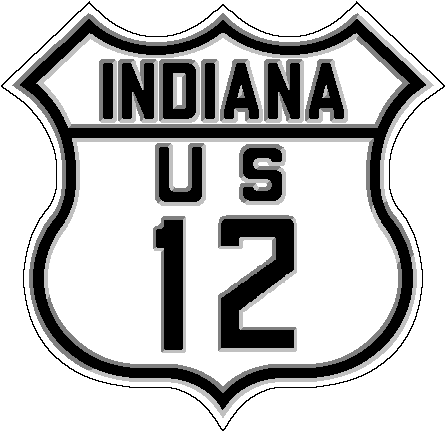
US 12
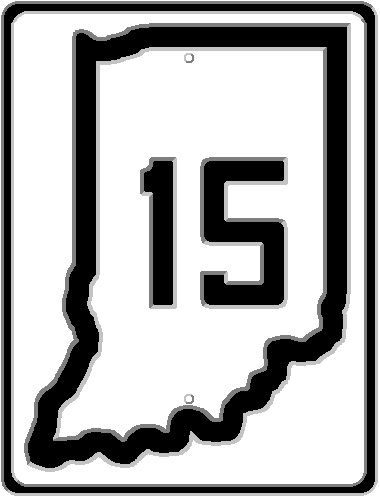
SR 15
SR 16
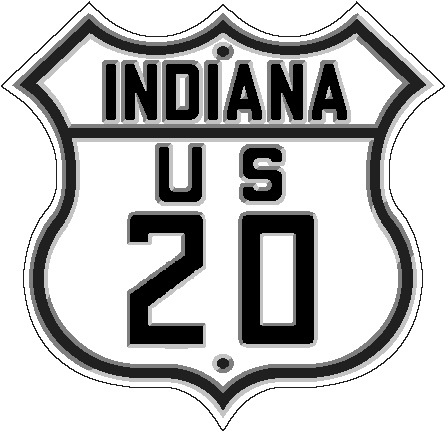
US 20
SR 22
US 24
SR 26
US 27
SR 28
SR 29
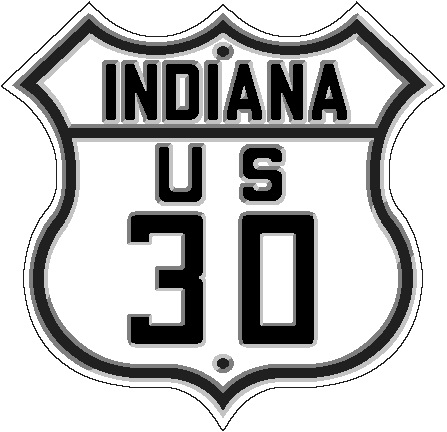
US 30
US 31
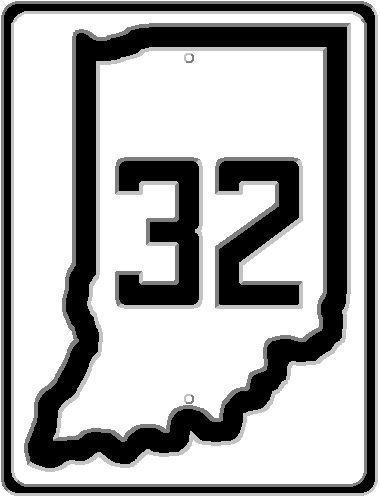
SR 32
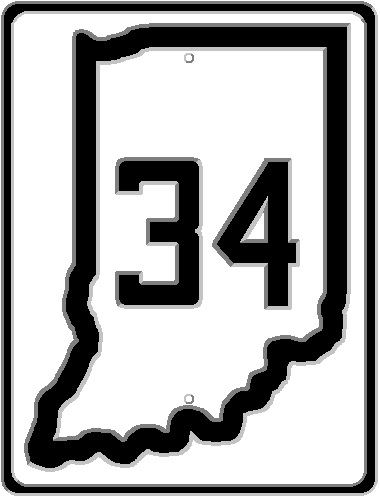
SR 34
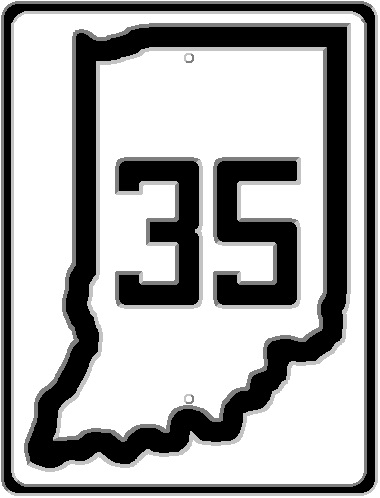
SR 35
US 36
SR 37
SR 39
US 40
US 41
SR 43
SR 44
SR 45
SR 46
US 50
US 52
SR 53

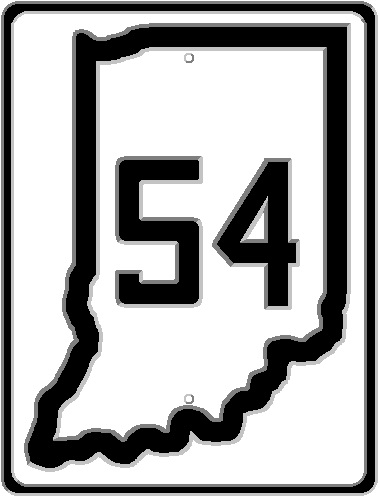
SR 54
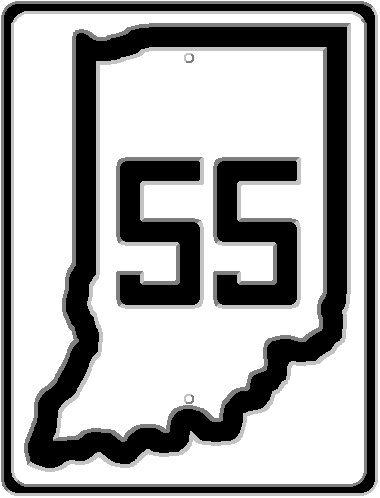
SR 55
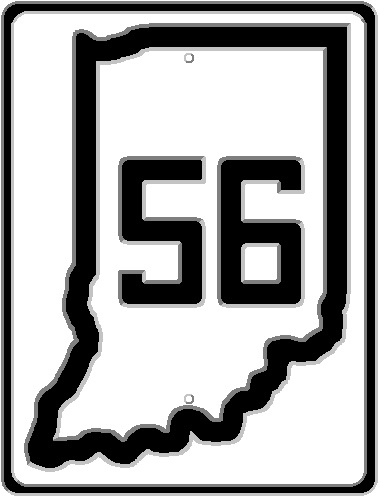
SR 56
SR 57
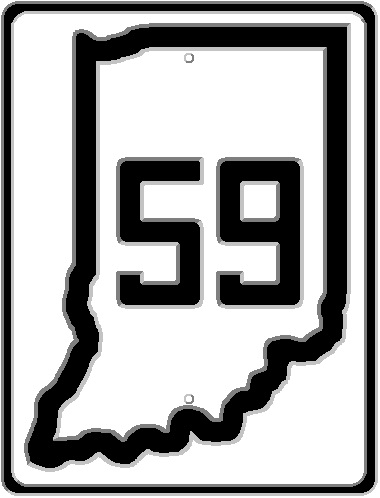
SR 59
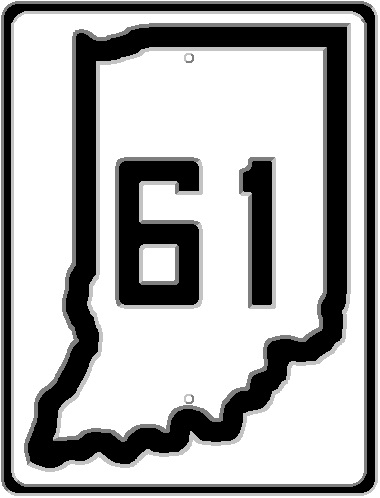
SR 61
SR 62
SR 63
SR 64
SR 65
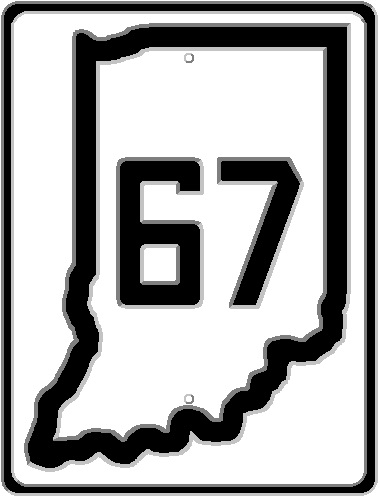
SR 67
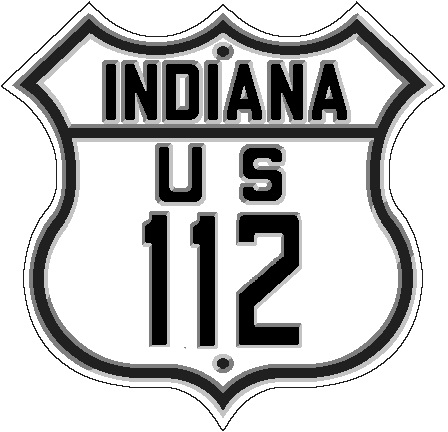
US 112
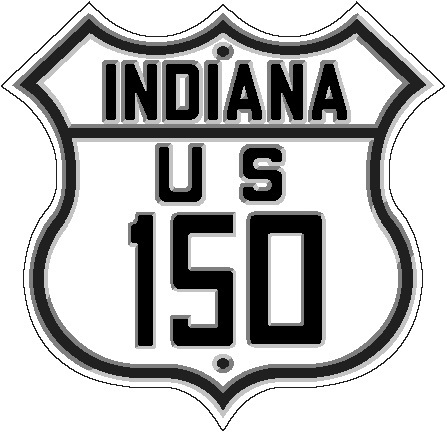
US 150

I-465 On the East Side of Marion County

This article is going to be very graphics heavy. I want to show what was being reported in the newspapers of the time about the construction of I-465…using the newspapers of the time.
First, the contracts for the building of the interstate…and their bidding times, at least as shown in the Indianapolis News of 25 November 1965.

In the Indianapolis Star of 30 December 1964, the following was reported: “(The Indiana State Highway Commission) Approved a $185,975 purchase price for the property of Pritchett, Hunt and O’Grady Inc. bowling lanes at 7714 East Washington Street, which is on the site of the planned interchange of U.S. 40 (Washington Street) and the east leg of Interstate 465. (Executive Director) Goodwin said negotiation on the bowling property has been the chief cause of delay in proceeding with I-465 construction north to U.S. 40 from the road’s end south of U.S. 52. Construction will probably begin in the spring.”

The following photo from the 1 May 1969 issue of the Indianapolis News shows interstate construction at Fall Creek. The News also makes a point to state they are correcting the caption, as they originally claimed it was I-65 at 22nd Street.

Evansville, Indianapolis and Terre Haute Railway

In 1938, the Cleveland, Cincinnati, Chicago & St. Louis Railway took over one of two rail lines that connected Evansville to Terre Haute. That rail line was the Evansville, Indianapolis & Terre Haute Railway. Along the way, many different consolidations took place to create that company. Also, operating agreements had to be thrown out the window as they went. This is a brief summary of that history.

The EI&TH was the 1920 reorganization of a long line of consolidations over the previous 60 years.

The first consolidation took place in 1869, when the Evansville & Indianapolis, the Indianapolis & Evansville, and the Evansville, Indianapolis & Cleveland Straight Line Railroad were merged to create the second Evansville & Indianapolis. The latter company was created to build a line as described in the title. The consolidation allowed the competitors to build one line instead of three. The Indianapolis & Evansville, however, had been born as the Evansville, Washington & Worthington.

The trackage for the future EI&TH was built by three companies that would be consolidated in 1884. The (second) Evansville & Indianapolis built from a point north of Evansville called Straight Line Junction to Maysville, a total of 51 miles.

The second company part of the merger was the Terre Haute & Southeastern. It was created in 1878, and soon after bought two railroads: the Cincinnati & Terre Haute Railway, which had built a 26 mile line from Terre Haute to Clay City; and the Terre Haute, Worthington & Bloomfield, which had acquired the right of way of the old Wabash & Erie Canal to build their railroad. The Terre Haute & Southeastern would continue the C&TH line for 14 miles from Clay City to Worthington.

The third company was the Evansville, Washington & Brazil, which had built a 43 mile line connecting the two lines above from Worthington to Maysville.

The consolidation of 1885 was put in place in the interests of another railroad that connected Evansville to Terre Haute. That route, called the Evansville & Terre Haute, had a much straighter line between the two cities. It also owned the tracks from Evansville to Straight Line Junction that was used by the Evansville & Indianapolis to enter the southern Indiana city. Both companies were under the operation of the Chicago & Eastern Illinois Railroad Company.

The C&EI bought the E&I in order to eliminate any competition to their mainline that was the Evansville & Terre Haute. But in the early 20th century, the age of anti-trust and anti-monopolies was dawning. The C&EI held off as long as they could. The company would sell the Evansville, Indianapolis & Terre Haute to the Big Four in 1920, shortly after that company had been created.

Indianapolis Interstates, Planning and Replanning

EDITOR’S NOTE: This entry is for reporting of history, not to choose sides in the planning of the interstate system in downtown Indianapolis. It is merely my intention to report on what happened.

When the first vestiges of the interstate system was being laid down, the plan to connect downtown Indianapolis to the entire system came up immediately. As I covered in the post “Interstate Plans in Indianapolis,” it was already decided, and approved by local, state and federal officials, that the two “major” interstates (65 and 70) would come downtown, while the two “minor” interstates (69 and 74) would connect to the outer loop interstate (465). All that was left were the details.

And as they say, nothing is set in stone until it is set in concrete. Such is the case with the “Inner Loop,” that section of the downtown interstate which is shared by both I-65 and I-70. The rough route of Interstate 70 has basically been decided through the city. Exact details would come later. But Interstate 65 would be a sticking point in the whole plan. The plan approved by local, state and federal officials would be debated for several years.

It came to a head in summer of 1965, when politicians started becoming involved in the routing of I-65…and the building of the inner loop. And the concern that federal funds would run out before the plan was completed.

Indianapolis News, 20 September 1965. The routing of the interstate system through Marion County had already been approved by local, state and federal officials. But that didn’t stop some people from trying to change them.

Up until the point of the summer of 1965, nine years of planning had already gone into the creation of the interstate system in Marion County. Delay after delay, mainly caused by slight variations in the planning, were in the process of being overcome. The whole plan found itself against a hard “drop dead” date, or what was thought to be a hard cap on said date, of 1972. Part of the legislation financing the entire nation’s interstate system stated that the Federal government would continue to pay 90% of the cost until 1972. “The chance that Congress, about five years from now, will extend the 1972 deadline is a gamble state officials cannot and dare not take.” (Indianapolis News, 20 September 1965)

The latest oppositions (in summer of 1965) came from Congressman Andrew Jacobs and City Councilman Max Brydenthal. Their major hang up with the plans was simply that I-65 should turn north on the west side of the White River, and that the inner loop should be completely depressed from multiplex section (where 65 and 70 share the same pavement) west to White River.

The Interstate 65 reroute from West Street west to 38th Street would, according to the proponents, would accomplish five things: 1) the original plan would dead end 40 streets through the west side, and the new plan would require no closing of streets; 2) the new I-65 route could be combined with the already planned SR 37/Harding Street expressway plans for the west side, lowering the cost of building both roads; 3) more interchanges could be worked in, allowing better access, especially to what would become IUPUI and its assorted facilities; 4) historic landmarks would be preserved (mentioned were Taggart Riverside Park, Belmont Park, and Lake Sullivan); and 5) there would be no delay in construction.

From the other side, the proponents of the original plan responded with six points of their own: 1) the original plans were already in the hands of the State Highway Department’s land acquisition office; 2) Construction design plans were already 85% complete; 3) designs for a bridge north of the Naval Armory were nearly completed; 4) the state already spent, or was in process of spending, $2.4 million for right of way; 5) preliminary planning and design fees had already cost the state hundreds of thousands of dollars; and 6) relocation would set the project back three years.

The other bone of contention was the inner loop…and the prospect of making it a below grade facility. As with the actual constructed facility, the depressed section of the interstate project would be from south of Washington Street to Morris/Prospect Street. The desired change would depress the entire center section, and both I-65 and I-70 from West Street to the combined corridor.

Part of the reasoning, used by those that wanted the highway depressed, was quite simply that an elevated expressway would add to the “blighting” of the area where that elevated was built. “In city after city, past experience demonstrated the blighting effect of elevated roadways (most of which are railroad) and we now have evidence that the depressed roadways actually enhance the value of property in their neighborhoods.”

Another bonus point in the depression of the interstate, say the proponents, is that Indianapolis would have a chance to install new sewers, bigger than the ones that were already in place. This included the possibility of the city/state buying snow melting machinery because the new sewers would be able to handle the increase in volume.

The people that had already done the planning pointed out that each section of the planned inner loop had to considered in sections, and not as a whole. Each section of the entire project had been studied and restudied. There was a study done for depressing the north leg of the project (I-65 from West Street to I-70). It had been discarded. The south leg would be partially depressed (at the east end) as would the east leg (at the south end).

One change in the routing of I-65 had already been put in place. On the south side of Indianapolis, the interstate was originally planned to go through Garfield Park. Now, it goes east of that facility.

In the end, the drop dead date of October 1972 came and went without the completion of the expressways downtown. It would be 1976 until they were opened to traffic. The new SR 37 expressway was never built…and now SR 37 doesn’t even connect to downtown Indianapolis. The original routing and elevation, planned in the early 1960’s, was followed as approved.

Kokomo

On 1 May 1844, when Richardville County was created, it was actually centered on the survey range line separating Range 3 East from Range 4 East. This is the same range line that continues south through Tipton and Hamilton Counties, and forms the main drag through downtown Westfield and Carmel and stops being followed by a road facility just south of the Hamilton-Marion County Line. North of Richardville County, it formed the boundary between Cass and Miami Counties.

The law creating the county was dated 15 January 1844, and stemmed from an act of 16 February 1839, which provided that territory temporarily attached to surrounding counties “shall form and constitute a separate county to be known and designated by the name of Richardville, and at such time as the Indian title shall be extinguished and the population within same will warrant.” The territory in question became both Richardville and Tipton Counties in the end. The name of the county was changed from Richardville to Howard by a legislative act of 28 December 1846.

The site of the town of Kokomo was decided upon on 17 August 1844 as a spot on the Wildcat Creek. That location was west of the range line that formed the eastern boundary of Kokomo into the 20th Century.

The state, shortly after the creation of Richardville County, started extending the already in place Westfield State Road north to reach the new county seat of Kokomo. Unlike most state roads built before this time, the state could build the road right along the survey line, in this case range line, straight up to Kokomo.

Kokomo mainly depended on the railroad to become the manufacturing center it became before the 20th Century. The first railroad to Kokomo would be the Indianapolis & Peru, which also connected Noblesville to the title cities. It would become the Lake Erie & Western along the way. The city would also (eventually) be crossed by what would become the Clover Leaf route, which would, in 1923, joined with the Lake Erie & Western to become part of the Nickel Plate. What would eventually become part of the Pennsylvania Railroad, via the Pittsburgh, Cincinnati, Chicago & St. Louis Railroad, would also cross Kokomo with its Chicago line between Richmond and Logansport.

1920 Rand McNally Auto Trails map
of the Kokomo area

The Auto Trail era brought named highways to Kokomo. The first one would be the Range Line Road (8 on the map), which, until south of Kokomo, followed that same Range Line as mentioned above. This route, south of Kokomo, was shared with the Belt Line (13).

But the Range Line (and the Belt Line) Road didn’t follow the survey range line into the city of Kokomo, which it had been following from northern Marion County. (It is Westfield Boulevard, Range Line Road, and Union Street in Hamilton County from Westfield south.) The Range Line Road south of Kokomo entered on Lafountain Street, before curving onto what is now Washington Street for its trip through the city itself. North of downtown Kokomo, the old Auto Trails still followed Washington Street to Morgan Street, where it turned east to Apperson Way. Apperson Way is on the survey range line. As shown on the map snippet to the left, the Auto Trails followed a circuitous route through Cassville.

The other two Auto Trails that connected Kokomo were the Ben Hur Route (91 on the map), which I covered in detail on 28 October 2019, and the Liberty Way (86), connecting Kokomo to Galveston and Walton to what will later become part of US 24 seven miles east of Logansport.

The Range Line Road would become, before this map was published, Main Market Road #1, and later State Road #1. The only other Auto Trail that would become part of the State Highway system at the time of the Great Renumbering would be the Ben Hur Route west of OSR 1 which was OSR 29. OSR 35 left Kokomo to the due east along Markland Avenue, which would later become US 35 (coincidence only…US 35 came to Indiana a decade after the Great Renumbering).

With the Great Renumbering: OSR 1 became US 31; OSR 29 changed to SR 26; and OSR 35 became SR 18. By this time, the route of US 31 north of Kokomo would have been straightened, bypassing Cassville to the west by 1/2 mile. This would put the highway on the survey range line north until it turned east toward Peru. Downtown Kokomo would be bypassed TWICE when it comes to US 31. But there was a chance there would have been now three bypasses of the city.

I-465 Construction, the PRR and Madison Avenue

Indianapolis served as a railroad capital for many years before the coming of the automobile. Since surface roads connected Indianapolis to many points in the state in many directions, it was logical that the coming of the automobile would lead to a concentration of automobile routes. But those were still subject to the locations of railroads. The interstate would change all that.

The purpose of the interstate was to create a high speed, limited interruption traffic flow. This, by definition, would require the new interstates to deal with going over or under those rail routes. Most of those intersections were accomplished with the interstate going over the railroads. And these overpasses are high, due to the clearances that were going to be required by the railroads at the time.

If one looks at a map of Interstate 465, one would notice that there is only one railroad bridge over the interstate. That bridge is the original Madison & Indianapolis, then Pennsylvania Railroad, on the southside. The reason for this really came down to the location of the interstate more than anything else.

When the interstate’s location was decided, it would follow closely to the original chosen location to SR 100 which it was replacing. That original location, in terms of Indianapolis modern street names, was Shadeland Avenue, 82nd/86th Street, High School Road, and Thompson Road. A quick glance at a map shows this.

On the southside, through the south central part of the county, this led to the interstate route traversing through the Lick Creek “valley.” The Pennsylvania Railroad already had a bridge over Lick Creek in the area. That same bridge also crossed the road leading into what was Longacre Park (being turned into a trailer park from September 1963), which had been in that location since 1926.

Louisville & Indiana (former Madison & Indianapolis/Panhandle/Pennsylvania Railroad) bridge over Lick Creek and Lick Creek Parkway into Longacre Mobile Home Park. This Google Maps image was sampled on 10 May 2020, from an image captured in June 2019. This image shows both the original bridge and the 1964 concrete expansion places on top to raise the level of the railroad.

The level of the railroad over that section of the coming interstate was right around 13 feet above ground level. This amount of clearance wasn’t enough for the State Highway Commission. This would require the Pennsylvania Railroad to raise the level of the railroad about three feet. This can be seen by the concrete extension over and above the old stone bridge over Lick Creek and Lick Creek Parkway just south of the interstate.

Google Map aerial photo of the Louisville & Indiana crossing of Interstate 465. Image was sampled 10 May 2020.

The Indianapolis Star of 27 March 1964, in a news story announcing road closures throughout the area, mentions that “Lawrence Street will be blocked for two weeks while the Pennsylvania Railroad elevated and repairs the tracks in connection with Interstate 465 construction.”

Also at work at the time was the Madison Avenue crossing of Interstate 465. Before the coming of the interstate, Madison Avenue had been a two lane state road, SR 431, south of Shelby Street. The main access to Longacre Park was actually north of Lick Creek, as shown in the following 1952 aerial photograph from MapIndy. The trailer park along Madison Avenue at Redfern Drive would come into direct play when I-465 started construction through the area.

1957 MapIndy aerial photograph of the Lick Creek area from Madison Avenue to Longacre Park.

Before the interstate construction would reach the area, a redesign of the Madison Avenue crossing of the area was already in process. The new bridge across the future interstate and Lick Creek would be two lanes in each direction. To accommodate this construction, a new, temporary, Madison Avenue would have to be built to bypass the area of the new bridge. Also, utility lines would also have to moved to the east.

1962 MapIndy aerial image of the area of Madison Avenue and Lick Creek.

The image to the left is the 1962 aerial photograph of the area from MapIndy. It shows the bypass Madison Avenue being built through the mobile home park at Redfern Drive mentioned above. The bypass would start south of the current Lick Creek Parkway, and reconnect to Madison Avenue right at the angled intersection of Shelby Street. The bypass route can be seen as the brighter road through the left center of the photo. (It hadn’t seen traffic yet, and as such was brand new concrete.)

Some people have wondered why Madison Avenue is the only (former) State Road that did not have an interchange with Interstate 465. Spacing is the only answer I could come up with. The Pennsylvania Railroad is one-quarter mile, or so, east of Madison Avenue. East Street, the US 31 bypass built in the early 1940’s, is one half mile west of Madison Avenue…not counting the ramp lengths. Shelby Street is one half mile east of East Street through its entire length through Marion County.

1962 MapIndy closeup aerial photo of the Madison Avenue bridge construction over future I-465 and Lick Creek.

The bypass Madison Avenue built in 1962 would become the frontage road in what was later the Madison Mobile Home Park. It is now called McConnell Way. A quick glance at utility lines through the area show that they weren’t been moved back to the side of Madison Avenue after construction was completed. The following aerial photograph, from 1972, shows the construction through the area completed.

1972 MapIndy aerial photograph of Madison Avenue and (then) Penn Central crossing of I-465 and Lick Creek.

For those interested, the cover photo for this post is the same area shown in all the other photos as would have been seen in 1937. That image is also from MapIndy. MapIndy is available online at: http://maps.indy.gov/MapIndy/index.html.

Road Trip 1926: Forgotten SR 11

The one road that was forgotten, even by the Indiana State Highway Commission, on the Indiana Official State Highway Map of the Great Renumbering was SR 11.

The original planned SR 11, as published in the newspapers at the time, became marked SR 7. But there was a SR 11…near Richmond. And it had that number because it was a continuation of SR 11 in Ohio.

Both SR 11’s, in Indiana and Ohio, were part of the National Old Trails Road Auto Trail. This carried traffic from Richmond to Dayton, then Springfield, instead of the route of the National Road, which became US 40, from Richmond to Springfield.

Building I-465 at West 21st Street

When the interstate system worked its way to Indiana, the plan for a bypass around Indianapolis was on the books as part of the project. Even before the route numbers were nailed down, the destinations and relative locations were in place. What would become I-465 would take almost a decade to build – more if you count the section from I-65 to I-865 on the northwest side of Marion County. (For more information about that statement, see “The Beginning of I-465,” published on 16 May 2019.) But I-465 was contentious…and not entirely for the reasons one would think.

Indianapolis Star, 11 August 1961.

The first real bone of contention (other than the coming destruction of entire sections of Marion County) was the area where I-465 and 21st Street meet on the west side. The section of the current interstate from Crawfordsville Road south to almost 10th Street runs very close to Big Eagle Creek. The town of Speedway at the time suffered from flooding on a regular basis. The state planned for 21st Street to cross over the interstate. Local residents, and county government, wanted the opposite…the interstate to cross over 21st Street. Part of the argument was that the state had already planned to elevate sections of the road on both sides of 21st Street. Why not keep the elevation for the 21st Street section.

Part of the argument was flooding…or the potential for such. People in the town of Speedway were under the impression that running 21st Street under the interstate would form a valve to keep flooding to a minimum. As the Indianapolis Star pointed out in an editorial piece on 24 August 1961, “nothing could be further from the truth.” The interstate was graded far above the maximum flood level at Eagle Creek. The building of an underpass for 21st Street, it is pointed out, would require a complete new system of levees to be built to control the flooding of 21st Street. The problem for Speedway and flooding was not an interstate overpass, but major work needed on Eagle Creek.

It was pointed out in another article that the plans for I-465 included, in the embankment for the bridges, four channels for water to flow through the area not actually in Eagle Creek. The Indianapolis Star of 9 July 1961 reported that Joseph I. Perrey, chief engineer for the Indiana Flood Control and Water Resources Commission, stated that no matter what was built at I-465 and 21st Street, the problem with Speedway flooding was more controlled by the 21st Street bridge over Eagle Creek. “The construction of 21st Street either under or over Interstate 465 will have no affect in stopping flooding.” Mr. Perrey continued “but a new county bridge could alleviate the situation somewhat.”

Progress was made towards changing the state’s mind about the 21st Street overpass. Summer of 1961 saw a flurry of activity. The state agreed to change the project, if the county put up a $50,000 bond to cover any cost overruns due to the change. The deadline for the county agreeing to that provision, and thus the contract to change the plans, was 21 August 1961. County Commissioners agreed to sign the deal that day, if they could include a provision to delay the posting of the bond. By law, the county said, it would take five days to make the money available.

But the State Highway Commission was also in a bind at this point. Construction had reached a point where concrete was ready to pour. Any delay in that poring could have resulted in the contractor suing the state. In addition to the changing of 21st Street from an overpass to an underpass, the county was asking that 21st Street be built four lanes wide, instead of two, to “avoid a greater expenditure if 21st must be widened later.” (Source: Indianapolis News, 21 August 1961)

The whole thing was made worse when the county questioned the state about the current status of the contract. (Source: Indianapolis Star, 8 September 1961) “The State Highway Commission yesterday refused the ‘bait’ offered by the Marion County Board of Commissioners to cancel the contract obligating the county commissioners to pay for the time the state suspended operations on Interstate 465.” The state was expected to send the county a bill for the six day shutdown of construction on the interstate due to the county trying to raise the bond money. The county, for its part, wanted the contract to be declared cancelled…which the state wasn’t having.

Add to this, the county stating that they weren’t paying anything until a full accounting was relayed to them. They expected it to be, roughly, $1,000 a day, not the $25,000 the State Highway Commission expected.

Meanwhile, the whole decision to build a 21st Street bridge over I-465 was being investigated by the Federal Bureau of Public Roads. That investigation started when three local residents accused the Highway Commissioner of conflict of interest, and hinted that his three sons would benefit from the building of an overpass. Indications were that libel suits would start flying from the Commissioner’s sons once cleared by the Federal investigation.

“The controversy over the intersection of I-465 and 21st Street was started by Jules T. Gradison who owns the land around the intersection. He demanded that 21st Street pass under I-465 and the state agreed to the change when the county commissioners offered to pay the extra cost, estimated at from $150,000 to $200,000.” Mr. Gradison also pointed out that he would have given any extra acreage needed to change the plan free of charge.

21st Street crosses over I-465 to this day. The overpass is also, to this day, only two lanes wide. With the many reconstructions of I-465 through that area, the 21st Street overpass has allowed for the widening of 465 needed over the years.